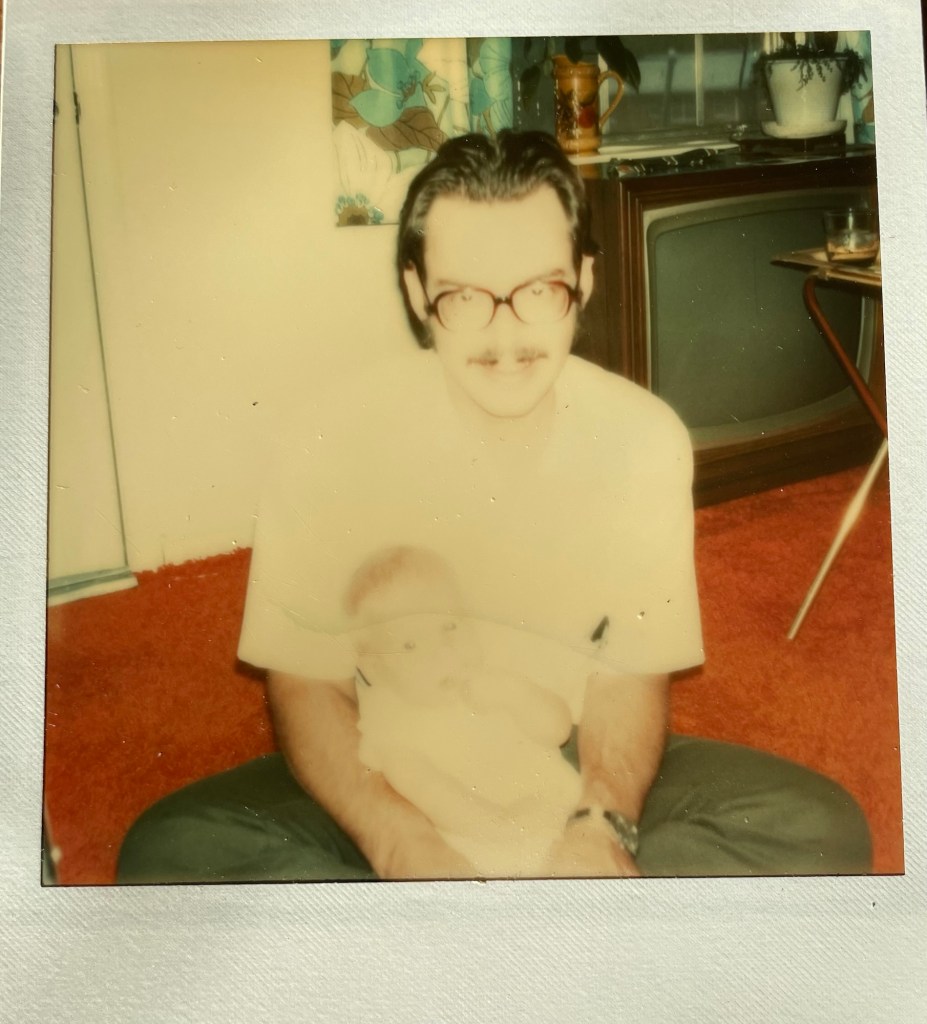
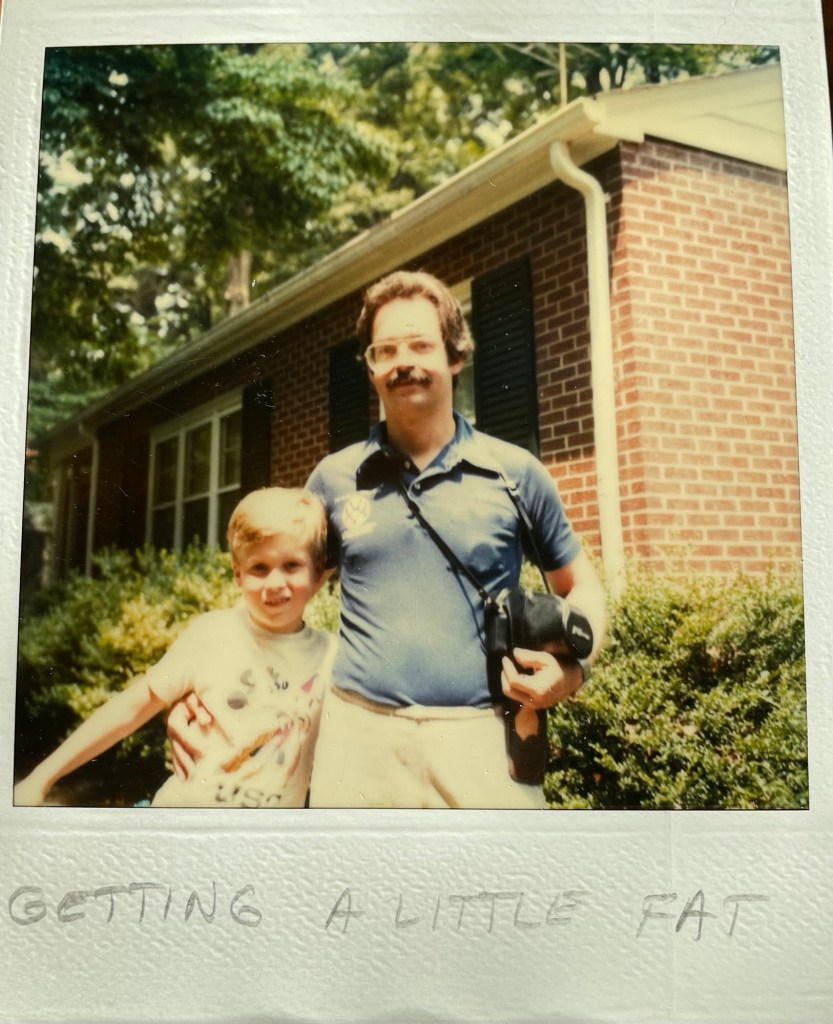
I mentioned my father in a recent post about my history, and I want to expand on it a little more. I think, in hindsight, that much of my childhood trauma comes from my relationship with him (though there are certainly other sources).
I never held my parents’ divorce against him. In fact, my mother forced her entire family to swear to secrecy about him until I turned 18. They never said a negative word about him, although I now know exactly how much some of them hated him.
I had lots of positive memories of him when I was a little kid. I remember riding on the back of his bicycle, lunches in the parks in downtown Richmond (Virginia). He was a fun dad and mostly attentive to me when we were together. During the summers, he enrolled me in age-appropriate summer programs where I learned photography, tennis, even how to play the coronet.
Unlike my mother, he would often say negative things about her. Naturally, though. They did not have the desired effect for him. How could they? I lived a billion miles away from all of my other family with only my mom as a support. His chances of turning me against her ranged somewhere between 0% and no-fucking-way. It just made me think less of him.
Of course, things grew strained when my mother and I moved to Alaska. We could only see each other two or three times a year (depending on if I had Christmas with him or my mom). I would fly, alone usually, from Anchorage through Seattle, Chicago and then to either Dulles or, later, Cleveland.
That’s when he became neglectful of me. Birthday cards would be postmarked after my birthday, and contain just a generic check. Phone calls were rare, and always very emotional for me. I missed him, and I never felt important to him.
Then he met his third wife, a young widow with two young boys. They connected quickly — one visit I was meeting them for the first time, the next he had moved in with them. (That wasn’t necessarily super fast in a normal time-scale, but for me and my occasional visits, it seemed very sudden.) Before long, they were married and he had adopted her sons and I had two younger brothers.
At that point, I felt less like a low priority and more like an afterthought. This only intensified when he had two daughters with my stepmother. They were a family, I was an interloper. A reminder of a past my father had. I never really bonded with my stepmother, and she, I think, never really made an effort to connect with me.
She was also very religious — reformed Presbyterian (a sect that I’ll talk about more later) — and all of a sudden, my fun dad was replaced by church-five-days-a-week, Bible-study-in-the-evenings dad. I dutifully went to church and Sunday school with the family, but it really didn’t resonate with me. I did “convert” to Christianity at one point, I think mostly for him, but it didn’t bring any satisfaction for me. It didn’t last.
I haven’t really gotten to this part of my personal story yet, but my relationship with my father was further strained by my sexual abuse. Not my sexual abuse, but the fact that I sexually abused one of my younger siblings in turn. This really drove a wedge between my stepmother and I (understandably), who could never forgive me for it. As a consequence, I became persona non grata at their house. Even phone calls were met with hostility.
I know that during this time, it became harder for my father to interact with me. At least, I think it became more costly within his relationship to my stepmother to make efforts. As a result, our interactions narrowed further. When he was in the state of North Carolina, he would reach out to me and we would meet, maybe once or twice a year. We’d have dinner, chat for a short time.
Then I had my own son. I talked to my father about how I felt neglected and abandoned by him; he admitted his mistakes. I told him that I would not tolerate my own children wondering if their grandfather loved them, as I had doubted his love for me. If they never heard from him at all, they would not ever miss him, but continued reminders from him that he wasn’t involved with them would only hurt them.
He said he understood, but his actions didn’t show it. My son didn’t get visits or letters or cards or gifts. His grandfather on my side was simply a non-entity to him. As the years went on, I saw my son’s maternal grandfather being a loving and positive force in his life. On my side, all you could hear were crickets.
As a result, I went no-contact with my father probably about 18 years ago. He never met my youngest kids. I’m not even sure he met my kids from my second marriage. I’ve called him twice: once when my mother died (I thought he’d want to know his first wife had passed; I was mistaken) and once when I learned I had inherited a genetic blood disease from him (hereditary hemochromatosis — thought he should know he carried a gene that would put him at greater risk; again, mistaken).
I last spoke to him in 2015. No contact started probably around 2007? I don’t remember exactly. We are still connected on a few social media systems, but communication is minimal. (Although one time, he sent me a story about a teacher, a jar and progressively smaller rocks, recounted here. The moral is supposed to be about filling your life (jar) with the important things first (larger rocks, representing what’s most important to you) before you fill it with trivial things. Given our estranged relationship, I can only assume he bulk-delivered it to everyone on his social media. Understandably, receiving this message about prioritizing the important things in life did NOT fill me with the warm fuzzies.)
I don’t even know if he’s still alive, but given that he was last a professor at Liberty University (courtesy of LinkedIn), I feel certain that I would have had ample other reasons to go non contact since 2016.
Why am I thinking about this now? I’ve been doing a lot of self-reflection about myself lately. I think 2025 will be a year of self exploration. I’ve identified myself as having an Anxious Attachment Style, and that largely comes from feeling abandoned as a child. Maybe I felt loved by him when I was a little, little kid? I’m not sure, but I do know the rest of my childhood and all of my adulthood was filled with doubts and fears about whether I would ever receive his love and approval.
Now, at 50, I still struggle to believe that I’m good enough, important enough or worthy of love from the people around me. Perhaps I always will. It’s not easy to break from the patterns that were generated in our childhood, and the older you are, the more you have embedded those toxic thoughts into your soul. They’re like deep ruts in a road from constant usage, and no matter how hard you try, your wheels will always want to fall back into them.
At least now, though, by seeing the patterns and understanding their origins, I have a chance to break the cycle and teach myself new ways to think.

Leave a comment